
|
Getting your Trinity Audio player ready...
|
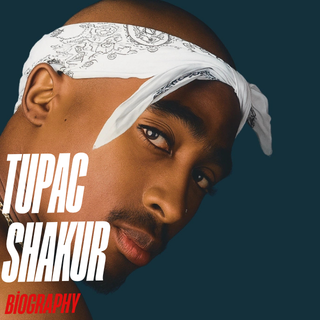
Tupac Shakur Biography: Life, Career, Death, and the 2026 Murder Verdict
Tupac Shakur remains one of the most searched names in hip-hop nearly thirty years after his death, and this week gave fans a reason to search his story again: a Las Vegas jury has just found Duane “Keffe D” Davis guilty of first-degree murder in Shakur’s 1996 killing, closing a chapter that had stayed open for almost three decades. This profile covers who Tupac actually was, how his career unfolded, what made his music so influential, and where the case tied to his death stands now.
Who Was Tupac Shakur?
Tupac Shakur, also known by the stage names 2Pac and Makaveli, was an American rapper, poet, and actor whose short career, cut off at age 25, produced some of the most enduring and studied music in hip-hop history. He blended raw social commentary about poverty, racism, and police violence with the more aggressive, thug-life persona that defined much of 1990s gangsta rap, and that tension between conscience and bravado is a big part of why his catalog still gets picked apart and reinterpreted decades later.
Real Name and Birth
He was born Lesane Parish Crooks on June 16, 1971, in East Harlem, New York City. His mother later renamed him Tupac Amaru Shakur, after Tupac Amaru II, an 18th century Incan revolutionary leader who was executed for rebelling against Spanish colonial rule. In the Quechua language, “Tupac Amaru” roughly translates to “shining serpent,” while “Shakur” is Arabic for “thankful.” Had he lived, Tupac would be 55 years old in 2026.
Family Background and Early Life
Tupac’s mother, Afeni Shakur, was an active member of the Black Panther Party in New York during the late 1960s and early 1970s. She gave birth to him roughly a month after being acquitted on more than 100 charges in the high-profile “Panther 21” conspiracy trial, a case that accused party members of plotting attacks on New York landmarks. His stepfather, Mutulu Shakur, later became a fugitive on the FBI’s most-wanted list, and his mother struggled with addiction during parts of his childhood, details that shaped both his politics and the instability that marked much of his upbringing.
His family moved frequently. In 1986, they settled in Baltimore, Maryland, where Tupac enrolled at the Baltimore School for the Arts, an elite public arts high school. By most accounts he thrived there, excelling in acting, poetry, jazz, and ballet, and it’s where he first met a young Jada Pinkett, who would remain a close friend for the rest of his life. Before he could graduate, his family relocated again, this time to Marin City, California, a move that pulled him away from the arts education he’d been excelling in and into a much rougher environment. He never finished high school in a traditional sense, though he later earned his GED.
How His Music Career Started
Tupac’s entry into the music industry began in 1989 through Digital Underground, a Northern California hip-hop group best known at the time for their P-Funk-inspired sound. He joined initially as a roadie and backup dancer before working his way into more visible roles within the group, eventually appearing on some of their recordings and beginning to build a reputation as a performer in his own right.
His first real spotlight moment as a recording artist came in 1991, and by that same year he released his debut solo album, “2Pacalypse Now.” The record didn’t produce major commercial hits, but it caught attention for its unflinching focus on systemic racism, police brutality, and poverty, themes that would remain central to his writing throughout his career. The album drew public criticism from political figures, including then Vice President Dan Quayle, who blamed it for contributing to violence, criticism that, if anything, only raised Tupac’s profile further.
Breakthrough and Rise to Recognition
His acting career developed in parallel with his music, and the two fed each other. He appeared in “Juice” in 1992, playing a role that showcased a genuine intensity as a performer, followed by “Poetic Justice” alongside Janet Jackson in 1993 and “Above the Rim” in 1994. Musically, his profile grew steadily through albums like “Strictly 4 My N.I.G.G.A.Z.” in 1993 and “Me Against the World” in 1995, the latter debuting at number one on the Billboard 200 while he was actually incarcerated, a fact that only deepened the mythology building around him.
That period of his life was marked by serious legal trouble. He served time on a sexual abuse conviction, and in November 1994 he survived being shot multiple times during an armed robbery at a New York recording studio, an attack he believed was connected to rivals within the industry. These events, combined with his increasingly confrontational public persona, blurred the line between his art and his real life in a way that became central to how audiences understood him.
Music Style and Themes
Tupac’s writing moved between two distinct registers throughout his catalog. On one side sat socially conscious material addressing racial injustice, poverty, and the pressures facing Black communities in America, songs that uplifted women and emphasized fatherhood and personal responsibility. On the other side sat the harder, thug-life material that leaned into violence, materialism, and the West Coast gangsta rap aesthetic that dominated the genre commercially during that era. That duality is a big reason his catalog still gets studied and debated, since it resists being reduced to a single lane the way a lot of his contemporaries’ work does.
Most Popular Songs and Albums
After signing with Death Row Records, Tupac released “All Eyez on Me” in 1996, a sprawling double album that became the first of its kind in hip-hop and sold more than five million copies within its first year, debuting at number one on the Billboard charts. Tracks like “California Love,” a collaboration with Dr. Dre, and “How Do U Want It” became massive commercial hits and remain among his most recognized songs today.
That same year, tensions with East Coast rappers, particularly The Notorious B.I.G. and Bad Boy Records, escalated into one of the most notorious feuds in music history. Tupac interpreted Biggie’s 1995 track “Who Shot Ya” as a direct provocation tied to the 1994 studio shooting, and he responded in the summer of 1996 with “Hit ‘Em Up,” an aggressive diss track that intensified what had already become a defining and destructive East Coast versus West Coast rivalry within hip-hop.
Following his death, Death Row released “The Don Killuminati: The 7 Day Theory” under the pseudonym Makaveli, an album Tupac wrote and recorded in just three days while incarcerated at Clinton Correctional Facility, drawing inspiration from the political writings of Niccolò Machiavelli. He maintained full creative control over that record, including its cover art, which depicted him crucified as a commentary on how he felt the media had treated him. It debuted at number one and sold over 660,000 copies in its first week.
Collaborations and Producers
Tupac worked closely with producer and rapper Dr. Dre, whose contribution to “California Love” helped make it one of the defining hip-hop singles of the decade. He also collaborated extensively with Death Row Records founder Suge Knight, whose label released Tupac’s most commercially dominant work, and recorded with a range of other artists across the West Coast rap scene during his time with the label.
Awards and Recognition
Tupac was nominated for six Grammy Awards over the course of his career, though he never won one while alive. He was inducted into the Rock & Roll Hall of Fame in 2017, with Alicia Keys performing in his honor at the ceremony, and received a posthumous star on the Hollywood Walk of Fame in 2023. According to figures cited by his estate, he has sold more than 75 million albums worldwide, a total that places him among the best-selling music artists in history and reflects how much of his catalog continued selling steadily in the decades following his death.
Death and the Case That Followed
On September 7, 1996, Tupac was shot multiple times in a drive-by attack while riding in a car in Las Vegas following a Mike Tyson fight. He died six days later, on September 13, 1996, at age 25. For 27 years, no one was formally charged in his killing, despite widespread belief within the hip-hop community and law enforcement that the shooting was connected to gang rivalries tied to Death Row Records and the broader East Coast versus West Coast feud.
That changed in September 2023, when Duane “Keffe D” Davis, a former Southside Crips member, was indicted on one count of murder. Prosecutors alleged Davis orchestrated the shooting as retaliation for an earlier physical altercation involving his nephew, and that he provided the firearm used in the attack. Davis had previously discussed his alleged involvement publicly, including in a 2019 memoir, statements prosecutors leaned on heavily during trial. After his trial began in Las Vegas in August 2026, following repeated delays, a jury found Davis guilty of first-degree murder in Tupac’s death this week, marking the first and only criminal conviction ever secured in the case.
Legacy and Current Cultural Presence
Nearly thirty years after his death, Tupac remains one of the most streamed, studied, and referenced figures in hip-hop, with his music continuing to reach new listeners well outside the era it was originally made in. His influence shows up regularly in how younger rappers approach social commentary, vulnerability, and the blending of political consciousness with commercial appeal. A street in Oakland has been named in his honor, and he continues to appear in new cultural projects, including an upcoming video game reportedly titled “Stranger Than Heaven.” With the resolution of the Davis case this week, one of the longest-running open questions in hip-hop history has finally reached a formal legal conclusion, even as Tupac’s music and cultural impact show no signs of fading.
Frequently Asked Questions About Tupac Shakur
How old was Tupac when he died? He was 25 years old, having been shot on September 7, 1996, and dying six days later on September 13, 1996.
What was Tupac Shakur’s real name? He was born Lesane Parish Crooks and later renamed Tupac Amaru Shakur.
Who killed Tupac Shakur? Duane “Keffe D” Davis was found guilty of first-degree murder in Tupac’s death in a Las Vegas trial that concluded this week, nearly 30 years after the shooting.
How many albums has Tupac sold? His estate and industry figures put his total sales at more than 75 million albums worldwide, including over 50 million in the United States.
Was Tupac inducted into the Rock & Roll Hall of Fame? Yes, he was inducted in 2017, with Alicia Keys performing a tribute at the ceremony.
Be the first to comment