
|
Getting your Trinity Audio player ready...
|
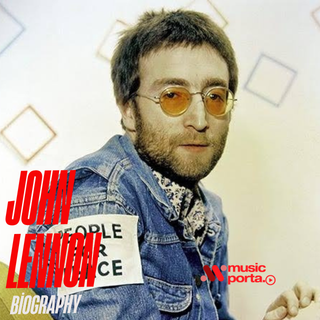
John Lennon: The Beatles Founder Whose Solo Career Redefined Rock Songwriting
John Lennon is remembered as one of the two central songwriters of the Beatles and as a solo artist whose work after the band’s breakup pushed rock music toward rawer, more personal territory. Fans searching for him today are usually after one of a few things: his real name and background, how the Beatles actually formed, what his solo albums sound like and why “Imagine” became his defining song, and the circumstances of his death in 1980. This piece works through all of it in order.
Who Was John Lennon?
Lennon was an English singer, guitarist, and songwriter, best known as a founding member of the Beatles and, after 1970, as a solo artist and peace activist working closely with his second wife, Yoko Ono. He wrote or co-wrote a large share of the Beatles’ catalog with Paul McCartney, then built a distinct solo identity built around confessional lyrics, political statements, and stripped-down production.
Real Name and Basic Facts
His full given name was John Winston Lennon, later changed to John Winston Ono Lennon after his marriage to Yoko Ono in 1969, as a way of formally incorporating her name into his own. He was born on October 9, 1940, and died on December 8, 1980, at age 40.
Birthplace, Nationality, and Family Background
Lennon was born in Liverpool, England, at Liverpool Maternity Hospital, during a German air raid on the city. His parents, Alfred Lennon and Julia Stanley, had married young and did not stay together. Alfred was a merchant seaman who was away much of the time and had little involvement in raising his son. Julia and John kept a relationship going even after she was unable to raise him herself, and by most accounts she taught him to play banjo and shared his enthusiasm for Elvis Presley’s records.
Because his parents’ marriage fell apart early, Lennon was raised primarily by his aunt, Mimi Smith, and her husband George, in the Liverpool suburb of Woolton. Mimi ran a strict household, and family accounts describe her as skeptical of John’s interest in music. Julia stayed close to her son and, in 1957, bought him his first proper guitar, a Gallotone Champion acoustic. She reportedly had it delivered to her own house rather than Mimi’s, since her sister disapproved. Julia died in 1958 after being struck by a car, a loss that shaped much of Lennon’s later songwriting.
Early Life and Education
Lennon was a restless, sharp-tongued student who struggled inside the structure of formal schooling even as his creative instincts developed early. He failed his O-level exams but was accepted into the Liverpool College of Art on the strength of his portfolio and personality, where he met Cynthia Powell, who would become his first wife. Around the same period, he was already spending most of his free time on music rather than schoolwork, forming a skiffle band called the Quarrymen while still a teenager.
How the Music Career Started
The Quarrymen were a loose skiffle outfit Lennon put together in 1956, playing music built around guitar, washboard, and tea-chest bass in the style popular in Britain at the time. The band’s lineup shifted constantly, but one 1957 performance changed its direction permanently: a young Paul McCartney was in the audience, the two met afterward, and McCartney soon joined the group. George Harrison came in not long after on McCartney’s recommendation. Over the next few years the band went through several name changes before settling on the Beatles in 1960, with Stuart Sutcliffe and Pete Best rounding out the early lineup before Ringo Starr replaced Best on drums in 1962.
Breakthrough with the Beatles
The Beatles built a following playing extended club residencies in Hamburg and Liverpool’s Cavern Club before manager Brian Epstein took them on and helped secure a recording contract. Their commercial breakthrough came in 1963 with hit singles including “Please Please Me” and “She Loves You,” which triggered a wave of public enthusiasm in Britain that the press labeled Beatlemania. The band’s smart matching suits and coordinated haircuts, encouraged by Epstein, became part of their early visual identity even as Lennon’s natural irreverence remained visible in interviews and stage banter.
Their reach expanded dramatically in 1964 with “I Want to Hold Your Hand,” which topped two million in U.S. sales within weeks, and their February 1964 appearance on “The Ed Sullivan Show,” a moment widely credited with kicking off the British Invasion of American pop music. By August 1965 the band was playing to over 55,000 fans at New York’s Shea Stadium, a record-setting audience for a concert at the time.
Musical Style and Influences
Lennon’s writing drew on early American rock and roll, particularly Elvis Presley and Fats Domino, whose “Ain’t That a Shame” was reportedly the first song he learned to play. As the Beatles’ songwriting matured through albums like “Rubber Soul” (1965), Lennon’s contributions moved beyond straightforward love songs into more introspective and experimental territory. His later Beatles work and solo output leaned into stark, direct language, minimal ornamentation, and open engagement with his own psychology, a marked contrast to the more melodic, optimistic tendencies often associated with McCartney’s songwriting.
Life with Yoko Ono and the End of the Beatles
Lennon’s relationship with Yoko Ono, a Japanese-American conceptual artist, began in the late 1960s and became central to both his personal life and his music. The couple married in 1969 and quickly became known for using their public profile to promote peace activism, most famously through the “bed-in for peace” events staged during their honeymoon, which produced the single “Give Peace a Chance.” Ono’s minimalist, direct approach to art influenced Lennon’s own instincts toward unfiltered, unpolished songwriting.
By the time the Beatles recorded “Abbey Road” in 1969, tensions within the group had grown difficult to manage, and Lennon left the band that September, shortly before the album’s release, though the split was not announced publicly until the following year.
Albums and Major Projects
Lennon’s first solo work actually predated the Beatles’ official breakup: he and Ono released three experimental records together, “Two Virgins,” “Life with the Lions,” and “Wedding Album,” alongside the live album “Live Peace in Toronto 1969” and hit singles “Give Peace a Chance,” “Cold Turkey,” and “Instant Karma!”
His first true solo studio album, “John Lennon/Plastic Ono Band” (1970), was recorded around the same time Ono released her own similarly titled album, and drew directly on Lennon’s experience with primal scream therapy. The record dealt openly with childhood abandonment and psychological pain, and while it did not sell as heavily as his later work, critics have since come to regard it as one of the most important albums of his career. It reached number eight on the UK Albums Chart and number six on the Billboard 200, and Rolling Stone later ranked it among the greatest albums ever made.
“Imagine” followed in 1971 and became, by wide consensus, the best-loved album of his solo career. Co-produced with Ono and Phil Spector, it swapped the austerity of “Plastic Ono Band” for fuller arrangements and more melodic writing. The title track became his signature song and one of the most widely recognized pieces of music of the twentieth century.
Lennon largely stepped back from music in the mid-1970s to raise his son Sean, returning in 1980 with “Double Fantasy,” a collaborative album with Ono built around songs that alternated between the two of them. Released just three weeks before his death, it went on to sell roughly three million copies and produced the number-one single “(Just Like) Starting Over.” A posthumous album, “Milk and Honey,” followed in 1984 using material from the same recording sessions.
Major Collaborations
Beyond his creative partnership with Paul McCartney in the Beatles, Lennon’s most significant musical collaborator was Yoko Ono, who co-wrote and co-produced much of his post-Beatles catalog. Producer Phil Spector worked closely with him on “Plastic Ono Band,” “Imagine,” and other early solo recordings, and Ringo Starr and bassist Klaus Voormann formed the core backing band on several of those sessions. George Harrison also contributed guitar to parts of the “Imagine” sessions during a period when the two former bandmates were still on friendly terms.
Awards and Achievements
Lennon’s Grammy history began with the Beatles, who won Best New Artist and Best Performance by a Vocal Group for “A Hard Day’s Night.” His only solo Grammy came posthumously, when “Double Fantasy” won Album of the Year in 1981. The Recording Academy gave him a Lifetime Achievement Award in 1991 and again, posthumously, as a member of the Beatles in 2014. “Imagine” was inducted into the Grammy Hall of Fame in 1999.
He was inducted into the Rock and Roll Hall of Fame twice, first as a member of the Beatles in 1988 and again as a solo artist in 1994, and into the Songwriters Hall of Fame in 1997. As a songwriter or co-writer, he is credited with contributing to 36 number-one singles on the Billboard Hot 100 across his Beatles and solo work combined.
Death and Legacy
On December 8, 1980, just weeks after “Double Fantasy” was released, Lennon was shot outside the Dakota, his apartment building on Manhattan’s Upper West Side, by Mark David Chapman, a man who had asked Lennon for an autograph earlier that same day. He was pronounced dead at the hospital shortly afterward. Chapman later pleaded guilty to the murder.
Lennon’s death cut short what many close to him believed was the start of a creative resurgence after several quiet years. “Double Fantasy” continued climbing the charts in the aftermath, and tributes followed from across the music world, including his former Beatles bandmates, who contributed to George Harrison’s 1981 single “All Those Years Ago” in his memory.
Frequently Searched Questions About John Lennon
What was John Lennon’s real name? He was born John Winston Lennon and later added Ono to his name after marrying Yoko Ono in 1969, becoming John Winston Ono Lennon.
How did John Lennon meet Paul McCartney? McCartney watched Lennon perform with his skiffle band, the Quarrymen, in 1957 and joined shortly afterward, eventually recruiting George Harrison as well.
What is John Lennon’s most famous solo song? “Imagine,” from the 1971 album of the same name, is widely regarded as his signature solo work.
Did John Lennon win any Grammys on his own? Yes, one: “Double Fantasy” won Album of the Year at the 1981 Grammy Awards, awarded after his death.
How did John Lennon die? He was shot and killed outside his New York City apartment building on December 8, 1980, by Mark David Chapman.
Was John Lennon inducted into the Rock and Roll Hall of Fame? Twice: once as a member of the Beatles in 1988, and again as a solo artist in 1994.
Be the first to comment